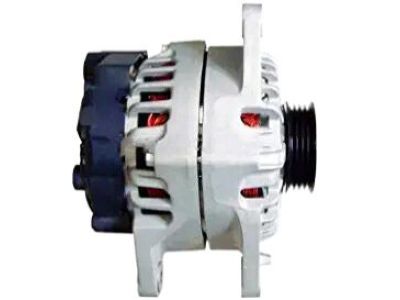
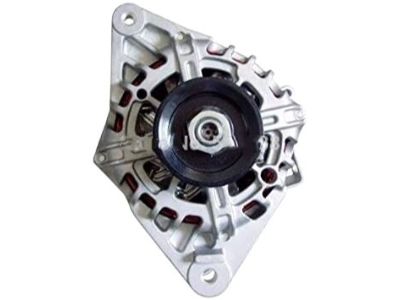
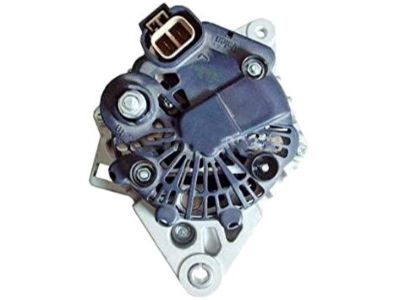
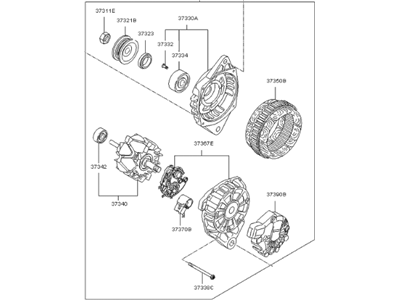
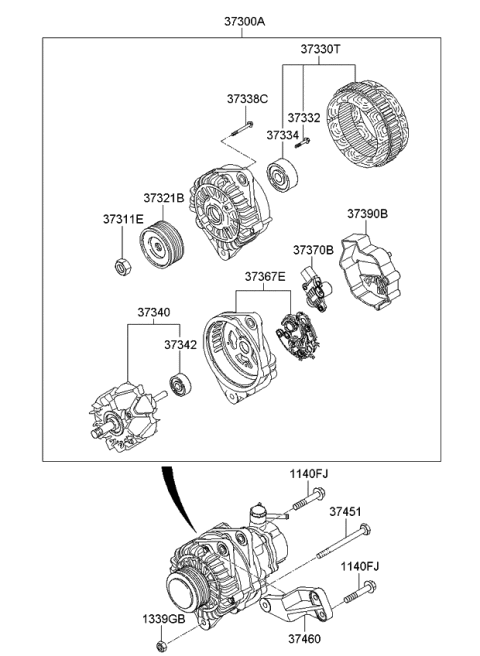
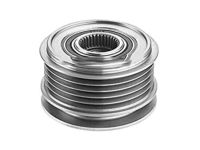
First disconnect the cable from the negative side of the battery. Remove the alternator drivebelt. Pull off the B+ terminal's rubber cover. On four-cylinder vehicles, peel the rubber weather shield, unscrew the nut, and free the output cable from its B+ terminal stud. Unplug the cable from its contact points on the battery and the alternator. Keep these wiring harnesses separate while working. To get the alternator out, you have to first take off the bolts of the tensioner on four-cylinder models and turn down the adjusting bolt. Then, loosen the bracket bolt and raise the bracket upward to create space for the removal. At the base, remove and take out the bolt that holds up the alternator. For the V6 Sportage, loosen the wheel lug nuts on the right front wheel, then lift and support the front part of the car securely with jackstands. Remove the wheel, then the right engine cover afterwards. Pull off the bolts that hold the alternator in place at the top and bottom. Then take out your old alternator. When you buy an alternator, make sure to keep your old one and choose a new or rebuilt unit that exactly matches yours: terminals in the same number and same size, in the same locations, and bearing the same identification numbers. To accommodate shoppers, most auto stores swap pulleys for free when you buy a new or rebuilt alternator. You need a puller tool to take out the pulley if the store doesn't offer free removal. You must tighten the mounting and adjusting bolts again when putting in the new alternator. Open the battery negative cable and plug it back in. Check for the correct charging voltage to tell if your alternator works correctly.