×
- Hello
- Login or Register
- Quick Links
- Live Chat
- Track Order
- Parts Availability
- RMA
- Help Center
- Contact Us
- Shop for
- Kia Parts
- Kia Accessories

My Garage
My Account
Cart
Genuine Kia Spectra Brake Caliper
Caliper- Select Vehicle by Model
- Select Vehicle by VIN
Select Vehicle by Model
orMake
Model
Year
Select Vehicle by VIN
For the most accurate results, select vehicle by your VIN (Vehicle Identification Number).
16 Brake Calipers found
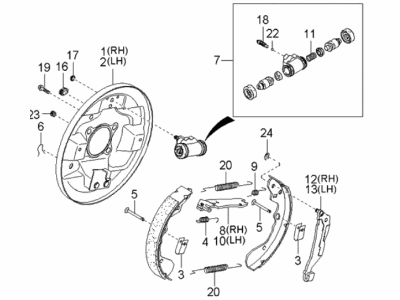

Kia Spectra Rear Drum Brake Assembly, Left
Part Number: 0K2N126990$237.43 MSRP: $329.77You Save: $92.34 (28%)Ships in 1-3 Business Days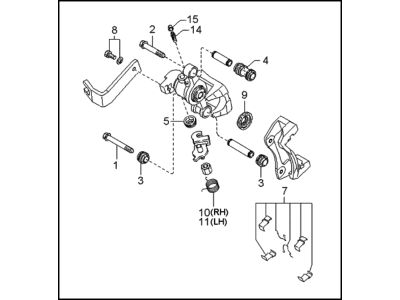

Kia Spectra Front Caliper, Left Without Pad
Part Number: 0K2N349990$217.60 MSRP: $316.73You Save: $99.13 (32%)Ships in 1-3 Business Days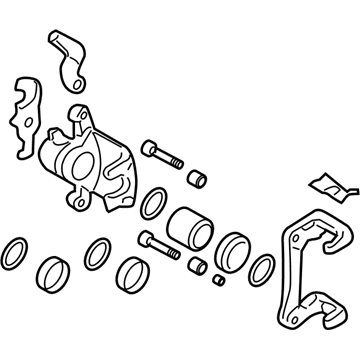

Kia Spectra Rear Wheel Brake Assembly Left Hand
Part Number: 582102F300$414.19 MSRP: $606.60You Save: $192.41 (32%)Ships in 1-3 Business Days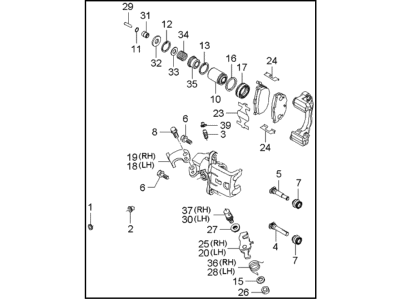
Kia Spectra Rear Wheel Brake Assembly Right Hand
Part Number: 582302F100$440.59 MSRP: $619.68You Save: $179.09 (29%)Ships in 1-3 Business Days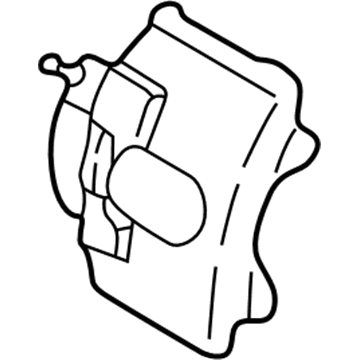

Kia Spectra Rear Caliper Left
Part Number: K0BB149990$214.38 MSRP: $312.05You Save: $97.67 (32%)Ships in 1-3 Business DaysKia Spectra Rear Caliper Right
Part Number: K0BB149980$214.38 MSRP: $312.05You Save: $97.67 (32%)Ships in 1-3 Business Days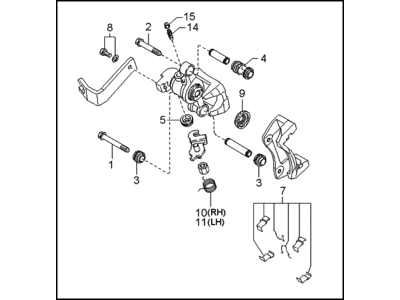
Kia Spectra Front Caliper, Right Without Pad
Part Number: 0K2N349980$217.60 MSRP: $316.73You Save: $99.13 (32%)Ships in 1-3 Business Days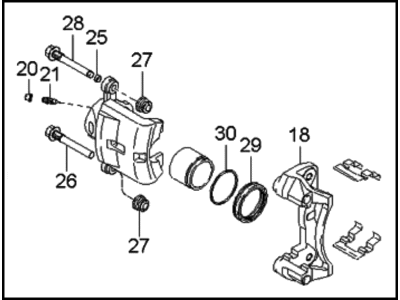
Kia Spectra Front Caliper, Left Without Pad
Part Number: 0K24049990A$217.60 MSRP: $316.73You Save: $99.13 (32%)Ships in 1-3 Business Days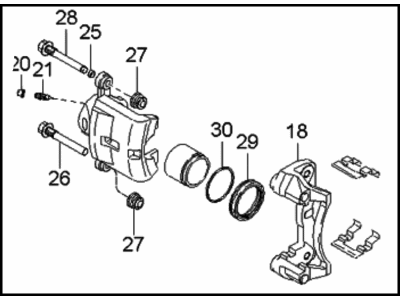
Kia Spectra Front Caliper, Right Without Pad
Part Number: 0K24049980A$217.60 MSRP: $316.73You Save: $99.13 (32%)Ships in 1-3 Business Days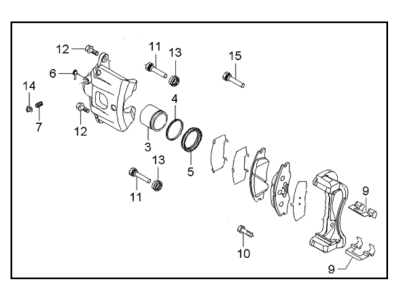

Kia Spectra Front Brake Assembly Right
Part Number: 581302F400$317.06 MSRP: $464.35You Save: $147.29 (32%)Ships in 1-3 Business Days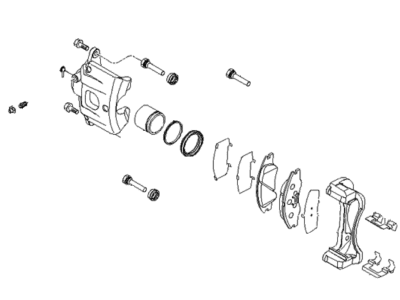
Kia Spectra Front Brake Assembly Left
Part Number: 581102F400$317.06 MSRP: $464.35You Save: $147.29 (32%)Ships in 1-3 Business DaysKia Spectra Rear Wheel Brake Assembly Right Hand
Part Number: 582302F300$396.47 MSRP: $580.65You Save: $184.18 (32%)Ships in 1-3 Business Days
Kia Spectra Front Brake Assembly Right
Part Number: 581302F100$330.15 MSRP: $464.35You Save: $134.20 (29%)Ships in 1-3 Business DaysKia Spectra Front Brake Assembly Left
Part Number: 581102F100$330.15 MSRP: $464.35You Save: $134.20 (29%)Ships in 1-3 Business Days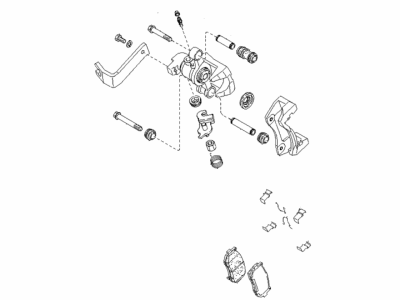
Kia Spectra Rear Brake Assembly, Left
Part Number: 0K2N326990$352.36 MSRP: $495.58You Save: $143.22 (29%)Ships in 1-3 Business Days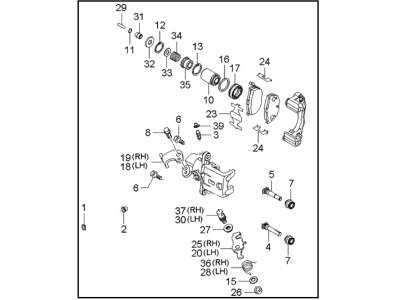
Kia Spectra Rear Wheel Brake Assembly Left Hand
Part Number: 582102F100$440.59 MSRP: $619.68You Save: $179.09 (29%)Ships in 1-3 Business Days
Kia Spectra Brake Caliper
The Kia Spectra Brake Caliper uses hydraulic pressure to produce strong clamp force which squeezes the pads against the rotor to provide dependable stopping power for drivers. Inside its cast iron shell are bores containing steel or phenolic pistons, tight seals, a bleeder screw and its hose port. Two core styles have served the Kia Spectra: the floating Brake Caliper and fixed Brake Caliper. The floating unit has a single inboard piston to slide the body on pins and the fixed version bolts solid and has opposed pistons for equal bite. Certain rear setups on Kia incorporate a screw style parking mechanism into the Brake Caliper such that pedal and hand brake share hardware. After pad replacement, a special tool is needed to wind pistons fully back in order to protect the seals and provide space for new friction material. Leaks, soft pedal, uneven wear or pull can indicate a sticking Brake Caliper leaving a Kia Spectra dragging and overheating rotors. Regular cleaning and lubrication of slide pins and boots ensure that any Spectra stops straight and quiet.
If you're in search of top-notch, reasonably priced OEM Kia Spectra Brake Caliper, then you've found the perfect spot. Our website boasts an extensive inventory of Kia Spectra Brake Caliper, all priced at the market's premier price. Rest assured, every genuine part we offer comes with a warranty straight from the manufacturer.
Kia Spectra Brake Caliper Parts Questions & Experts Answers
- Q:How to remove and install the front and rear Brake Caliper on Kia Spectra?Posted by Rania S.A:Starting with 1998 models, change both front and both rear calipers at once instead of just one, according to the maintenance guide. Before you can take off the front caliper, follow these steps: loosen the wheel lug nuts but don't remove them, lift up the front of the car, and set it on jackstands, take off the wheels. Untighten but don't remove the brake hose connection, then remove and raise the guide pins before taking off the caliper from its mounting bracket to unscrew it from the hose. Stop up the hose to protect the inside from exposure and leaking. When you're just working on other parts, don't disconnect the hose and keep the caliper from hanging down. Push the brake pad inside away from the piston to take it off. Simply return the caliper guide pins to their proper position and put torque on the brake hose. Do this carefully to prevent damage and leakage. You need to bleed the brake fluid through the system when the Brake Line has been disconnected. Put on the wheels and screws holding them to the hubcap. Then lower the car and screw the lug nuts tight. Before you work on the back caliper, loosen and raise the vehicle, put it on jackstands, and take the wheels off. Take off the banjo bolt to free the brake line from its connection to the caliper and put a cover on the end tube. Dispose of the seal washers, replacing them during assembly. Use a wrench to take off the bolts that hold the caliper in place. Then loosen the clip that holds the parking brake cable. Once done, pull the cable away from the caliper before disconnecting it from its mounting bracket. Start by pulling the vehicle to a safe, level space. Reverse the brake line removal steps in reverse: put new sealing washers on either side of the new brake line fitting, tighten the bolts that hold the caliper in place, and finally tighten the bolts that connect the brake line. After assembly, drain the brake system, put the wheels back on, lower the car, and screw in the wheel's lug nuts properly.Answered by Kia Parts Specialist Sheldon / Nov 30, 2025