×
- Hello
- Login or Register
- Quick Links
- Live Chat
- Track Order
- Parts Availability
- RMA
- Help Center
- Contact Us
- Shop for
- Kia Parts
- Kia Accessories

My Garage
My Account
Cart
Genuine Kia Spectra Oil Pump
Oil Fluid Pump- Select Vehicle by Model
- Select Vehicle by VIN
Select Vehicle by Model
orMake
Model
Year
Select Vehicle by VIN
For the most accurate results, select vehicle by your VIN (Vehicle Identification Number).
7 Oil Pumps found
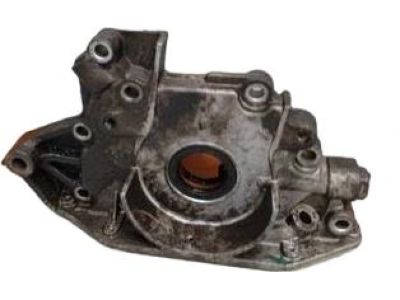

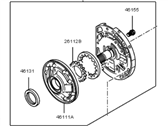
Kia Spectra Pump Assembly-Oil L
Part Number: 0K24714100C$157.48 MSRP: $218.72You Save: $61.24 (28%)Ships in 1-3 Business Days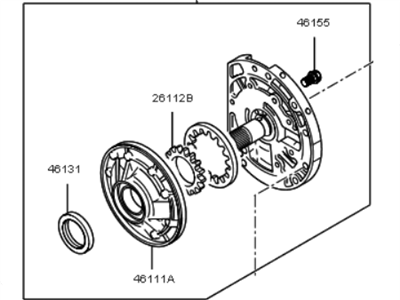

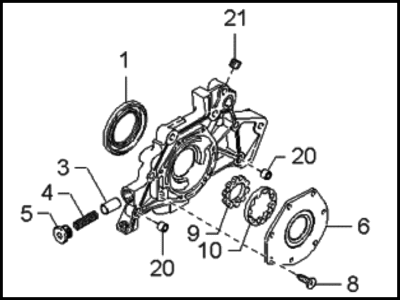
Kia Spectra Oil Pump Assembly
Part Number: 4611039000$395.41 MSRP: $556.13You Save: $160.72 (29%)Ships in 1-3 Business DaysKia Spectra Pump Compartment-Oil
Part Number: 213102Y010$150.10 MSRP: $208.47You Save: $58.37 (28%)Ships in 1-3 Business Days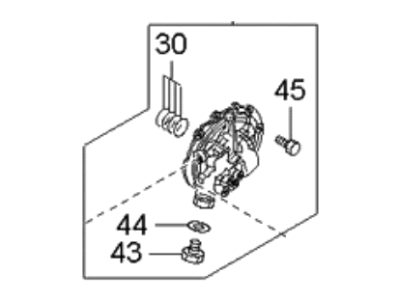

Kia Spectra Oil Pump Assembly
Part Number: MFU6119700K$504.45 MSRP: $721.67You Save: $217.22 (31%)Ships in 1-3 Business Days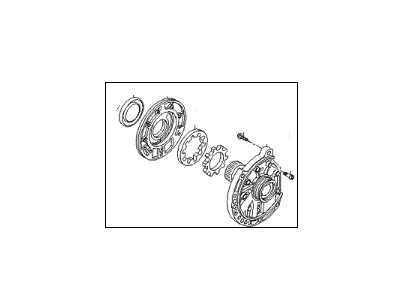

Kia Spectra Oil Pump Assembly
Part Number: 4611023000$307.76 MSRP: $432.85You Save: $125.09 (29%)Ships in 1-3 Business Days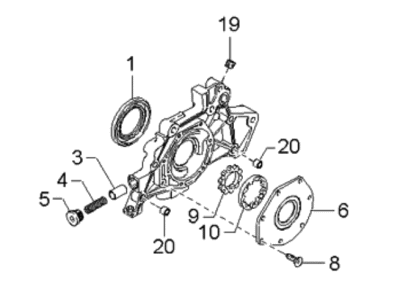

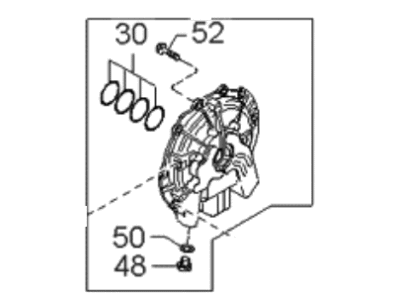

Kia Spectra Oil Pump
The function of the Kia Spectra Oil Pump is to keep the engine parts slippery and cool by pumping pressurized oil through the bearings, pistons, and camshafts. Driven by the crankshaft, the Oil Pump comes in three configurations throughout the Kia Spectra history, direct drive, gear or chain drive, and crankcase mounted versions with meshing gears providing the flow. Each Oil Pump should be checked during rebuilds for housing damage, gear clearance, and a freely moving relief valve. In direct drive form, the pump circles the crank nose itself, while gear or chain drive units are placed to one side of the crank and use external gears or a sprocket chain, and crankcase mounted pumps spin by a hex ended driveshaft that must avoid rounding. Whatever the style, the Oil Pump draws lubricant from the sump through a screened pickup, forces it through the filter and cooler, and feeds galleries housing pressure switches or sending units which alert many Kia Spectra drivers if pressure is low. Builders of high performance Kia Spectra engines sometimes select a high volume Oil Pump to provide additional flow for wider bearing clearances and, keeping clearances tight, relief valves free, and screens clean, the pump holds about 10 psi per 1,000 RPM.
If you're in search of top-notch, reasonably priced OEM Kia Spectra Oil Pump, then you've found the perfect spot. Our website boasts an extensive inventory of Kia Spectra Oil Pump, all priced at the market's premier price. Rest assured, every genuine part we offer comes with a warranty straight from the manufacturer.
Kia Spectra Oil Pump Parts Questions & Experts Answers
- Q:How to replace the oil pump in a Kia Spectra?Posted by Austin F.A:Uncollect the right front wheel lug nuts, then lift the front part of the vehicle and support it with jack stands. Empty out the engine oil and take out the oil filter. Depower the bike and wrench off the right front wheel, next unbolt the engine side cover. Loosen the crankshaft pulley until two dots line up with each other, this refers to the white groove on the crankshaft pulley and the pointer face on the lower cover. Eliminate the front exhaust pipe, and the alternator as well. Remove Timing Belt and the crank shaft sprocket. After the oil pan and the oil pump pick-up tube are out of the way, use a socket set to undo the housing mounting bolts to therefore rid the engine of the oil pump at the front. Position the oil pump housing horizontally on a clean bench, loosen and then take off the oil pump cover, the inner and outer gears can be removed. To do this you need to unscrew the cap that is at the top of the relief valve for oil pressure then remove the valve spring and after that the relief valve. On the pump body and the engine block, use a scraper to remove all sealant and the old gasket material from the machined surfaces; wash the area with a brake system cleaner. Remove and clean all those components in the oil pump which are of nature of being submerged into solvent and those should be checked for signs of wear and damages. Give the external surface of the oil pressure relief valve a visual check, applying fresh engine oil to the valve and ensuring that it fits into the bore by gravity; do not force it in, if it cannot slide in freely by gravity, then it has to be replaced. If the bore is damaged, replace the front part of the oil pump case and probably some of the gears on the driven shaft as well. Inspect the spring of the oil pressure relief valve and if damaged change the set made up of the relief valve and spring. Check and record the clearance of the driven rotor to body, rotor side and rotor tip using a feeler gauge while the marks are facing outwards. Remove the old front crankshaft seal using a screwdriver, then use multi-purpose grease or engine oil to coat the outer periphery of the new seal, then using the seal driver and hammer to install, and apply a little grease on the lip of the seal. Next insert the drive and driven rotors into the pump body, apply petroleum jelly in the pump cavities, fix the cover with suitably new gasket or RTV sealant having tightened the screws up to the torque mark in a cross-wise arrangement. Applying engine oil to the oil pressure relief valve, insert the valve and spring into the pump body and screw the screw-cap, guaranteeing that it is tightly fixed. Clean off the surfaces of the case gasket with brake cleaner using a clean rag; a new gasket should then be fitted on the oil pump case and tightened while using the mounting bolts and tightening them gradually in a criss-cross manner till the torque is attained. Placing an all new gasket, fit the oil pick-up tube, and tighten the bolts to the requisite torque. Replace the rest of the parts in the reverse order they were removed, have a new oil filter installed, add oil in the engine, turn on the engine and check for any leaks as well as inspect the oil pressure, then check for the optimum level of oil in the engine.Answered by Kia Parts Specialist Nate / Jul 21, 2025