×
- Hello
- Login or Register
- Quick Links
- Live Chat
- Track Order
- Parts Availability
- RMA
- Help Center
- Contact Us
- Shop for
- Kia Parts
- Kia Accessories

My Garage
My Account
Cart
Genuine Kia Sedona Brake Booster
Brake Power Booster- Select Vehicle by Model
- Select Vehicle by VIN
Select Vehicle by Model
orMake
Model
Year
Select Vehicle by VIN
For the most accurate results, select vehicle by your VIN (Vehicle Identification Number).
9 Brake Boosters found
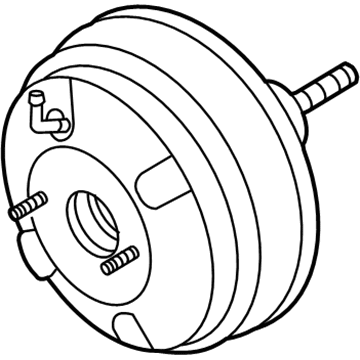

Kia Sedona Brake Booster Assembly
Part Number: 591104D501$462.83 MSRP: $682.63You Save: $219.80 (33%)Ships in 1-3 Business Days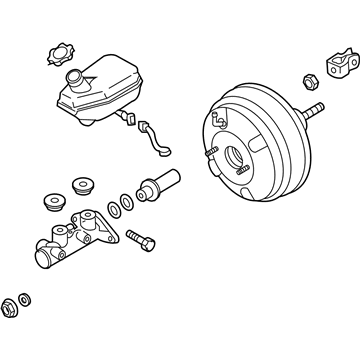
Kia Sedona Booster & Master Cylinder
Part Number: 585004D501$484.05 MSRP: $713.93You Save: $229.88 (33%)Ships in 1-3 Business DaysKia Sedona Booster & Master Cylinder
Part Number: 585004D551$491.31 MSRP: $724.65You Save: $233.34 (33%)Ships in 1-3 Business DaysKia Sedona Booster & Master Cylinder
Part Number: 585004D500$627.21 MSRP: $925.08You Save: $297.87 (33%)Ships in 1-3 Business DaysKia Sedona Booster & Master Cylinder
Part Number: 585004D550$640.55 MSRP: $944.77You Save: $304.22 (33%)Ships in 1-3 Business Days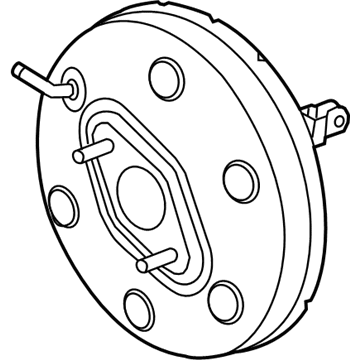

Kia Sedona Brake Booster Assembly
Part Number: 59110A9200$211.21 MSRP: $307.43You Save: $96.22 (32%)Ships in 1-3 Business Days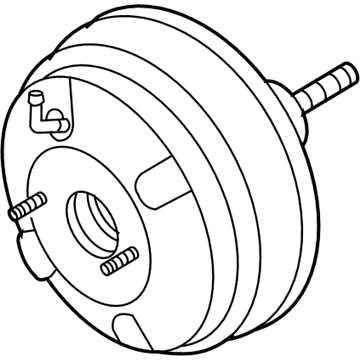
Kia Sedona Brake Booster Assembly
Part Number: 591104D500$386.02 MSRP: $565.35You Save: $179.33 (32%)Ships in 1-3 Business Days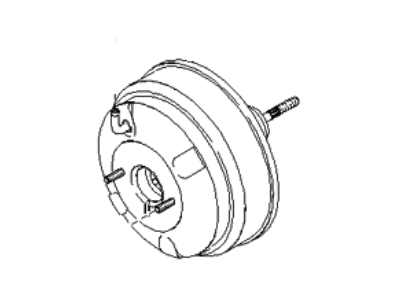

Kia Sedona Master Vacuum Assembly
Part Number: 0K52Y43800A$408.34 MSRP: $598.03You Save: $189.69 (32%)Ships in 1-3 Business DaysKia Sedona Vacuum-Master
Part Number: 0K52Y43800$425.20 MSRP: $598.03You Save: $172.83 (29%)Ships in 1-3 Business Days
Kia Sedona Brake Booster
Kia Sedona Brake Booster provides stronger stopping power while allowing drivers to apply brake pedal power with much less effort. Sitting between the brake pedal and the master cylinder, this device, known as the Brake Booster, increases the force supplied by your foot to get an amplified push of the brake system so the minivan stops quickly and smoothly. Many Kia Sedona generations have a vacuum-operated Brake Booster which uses negative pressure from the engine or an auxiliary pump. When the pedal is at rest, there is an equal vacuum on either side of an internal diaphragm. A pedal stroke opens a valve, atmospheric air fills the rear chamber, and the pressure difference pushes on a power piston which gives the master cylinder some muscle. Some model years also employ a hydraulic-style Brake Booster which uses the high-pressure fluid from the power steering pump or an electric motor pump to provide full assist, even with low engine vacuum during heavy loads. While the vacuum design in a Kia Sedona is reliable, it can have a loss of reserve boost after a few stops if the engine is off. Whichever type is fitted, the Brake Booster is an important safety feature in all Kia Sedona.
If you're in search of top-notch, reasonably priced OEM Kia Sedona Brake Booster, then you've found the perfect spot. Our website boasts an extensive inventory of Kia Sedona Brake Booster, all priced at the market's premier price. Rest assured, every genuine part we offer comes with a warranty straight from the manufacturer.
Kia Sedona Brake Booster Parts Questions & Experts Answers
- Q:How to perform an operating check, air tightness check, and replacement of the power brake booster unit on Kia Sedona?Posted by Ruben N.A:To perform an operating check, depress the pedal and start the engine; if the pedal goes down slightly, operation is normal. Depress the brake pedal several times with the engine running to ensure no change in the pedal reserve distance. For an air tightness check, start the engine and turn it off after one or two minutes, then depress the brake pedal several times slowly; if the pedal goes down farther the first time but gradually rises after the second or third depression, the booster is airtight. While the engine is running, depress the brake pedal and then stop the engine with the pedal depressed; if there is no change in the pedal reserve travel after holding the pedal for 30 seconds, the booster is airtight. The power brake booster unit requires no special maintenance apart from periodic inspection of the vacuum hoses and the case, and it should never be disassembled; if a problem develops, it must be replaced with a new one. Remove any vacuum from the booster by pumping the pedal several times with the engine off until the pedal feels hard to push. For models from 2005 or earlier, remove the battery; for 2006 or later models, remove the air filter housing. Clean the area where the master cylinder attaches to the power brake booster, then detach the master cylinder from the brake booster and carefully move it aside while keeping it supported, ensuring not to disconnect the brake lines. Disconnect the vacuum hose from the check valve located on the outside of the brake booster, then working under the dash, disconnect and remove the Brake Light Switch. Remove the clevis pin retaining clip with pliers and pull out the pin to disconnect the brake pedal pushrod from the top of the brake pedal. Remove the nuts attaching the booster to the firewall, then carefully withdraw the brake booster unit from the firewall and out of the engine compartment. Before installing the new booster, measure the booster pushrod-to-master cylinder piston clearance for 2005 and earlier models or booster input rod length for 2006 and later models, adjusting as necessary. To install the booster, place it into position on the firewall, tighten the retaining nuts to the specified torque, and connect the brake pedal to the brake booster pushrod with the clevis pin, securing it with the retaining clip. Installation is the reverse of removal, using a new gasket between the booster and the firewall. For 2005 and earlier models, if a new power brake booster unit is being installed, use a hand-held vacuum pump to apply a vacuum of 19.7 in-Hg to the booster, measure the pushrod protrusion from the master cylinder mounting surface, and calculate the pushrod clearance by comparing the measurements. For 2006 and later models, measure the distance between the power brake booster and the hole in the input rod clevis, adjusting the clevis length as necessary before installing the booster and connecting it to the brake pedal.Answered by Kia Parts Specialist Philip / Dec 24, 2025
Related Kia Sedona Parts
 Kia Sedona Brake Master Cylinder
 Kia Sedona Brake Fluid Level Sensor
 Kia Sedona Master Cylinder Repair Kit
 Kia Sedona Brake Proportioning Valve
Browse by Year
2021 Brake Booster 2020 Brake Booster 2019 Brake Booster 2018 Brake Booster 2017 Brake Booster 2016 Brake Booster 2015 Brake Booster 2014 Brake Booster 2013 Brake Booster 2012 Brake Booster 2011 Brake Booster 2010 Brake Booster 2009 Brake Booster 2008 Brake Booster 2007 Brake Booster 2006 Brake Booster 2005 Brake Booster 2004 Brake Booster 2003 Brake Booster 2002 Brake Booster 2001 Brake Booster