×
- Hello
- Login or Register
- Quick Links
- Live Chat
- Track Order
- Parts Availability
- RMA
- Help Center
- Contact Us
- Shop for
- Kia Parts
- Kia Accessories

My Garage
My Account
Cart
Genuine Kia Spectra Cylinder Head
Head- Select Vehicle by Model
- Select Vehicle by VIN
Select Vehicle by Model
orMake
Model
Year
Select Vehicle by VIN
For the most accurate results, select vehicle by your VIN (Vehicle Identification Number).
6 Cylinder Heads found

Kia Spectra Cylinder Head Assembly
Part Number: 2210023780$1429.03 MSRP: $2107.72You Save: $678.69 (33%)Ships in 1-3 Business Days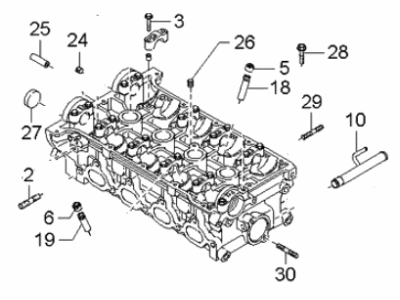

Kia Spectra Cylinder Head Assembly
Part Number: K220Z10090$892.14 MSRP: $1315.83You Save: $423.69 (33%)Ships in 1-3 Business Days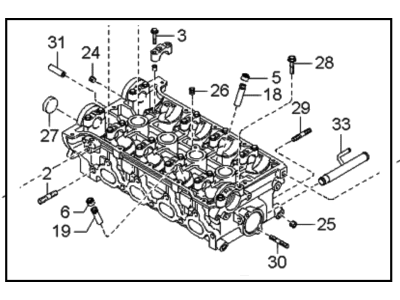

Kia Spectra Cylinder Head Assembly
Part Number: 0K24710100F$919.77 MSRP: $1315.83You Save: $396.06 (31%)Ships in 1-3 Business DaysKia Spectra Cylinder Head Assembly
Part Number: 221102Y100$919.77 MSRP: $1315.83You Save: $396.06 (31%)Ships in 1-3 Business DaysKia Spectra Cylinder Head Assembly
Part Number: 221002Y100$919.77 MSRP: $1315.83You Save: $396.06 (31%)Ships in 1-3 Business Days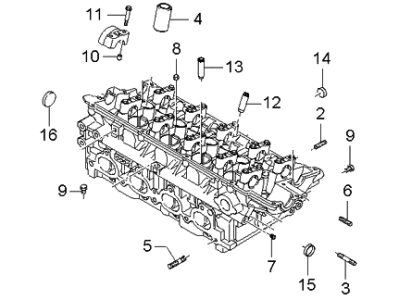

Kia Spectra Cylinder Head Assembly
Part Number: 2210023760$1473.29 MSRP: $2107.72You Save: $634.43 (31%)Ships in 1-3 Business Days
Kia Spectra Cylinder Head
Kia Spectra Cylinder Head plays the vital role of sealing the top of the engine's cylinders while guiding the fresh air-fuel charge in and out the hot exhaust, which keeps performance crisp and reliable. This Cylinder Head holds spark plugs, coolant passages, and the valves that open and close with split-second precision to fire every stroke. Many Kia drivers discover that worn guides, weak springs, or a blown gasket will allow compression to escape or coolant to mix with oil, leading to misfires, overheating, or fluid contamination. To avoid this kind of trouble, new torque to yield bolts are fitted so the gasket receives a uniform amount of pressure and the seal remains tight. Over the years, the Kia Spectra range has had cast iron Cylinder Head versions with a reputation for toughness as well as lighter aluminum versions that dump heat rapidly, enhance weight balance, and allow higher compression without detonation, but both styles strengthen critical areas so ports can be shaped for freer flow and more horsepower. On some Spectra models, when heat or detonation warps the surface, the Cylinder Head may crack and create leaks, a problem avoided by keeping the engine cool and fluids clean. By combining strong materials with smart clamping and efficient port design, the Cylinder Head allows every Kia Spectra to rev smoothly and make the utmost of its power.
If you're in search of top-notch, reasonably priced OEM Kia Spectra Cylinder Head, then you've found the perfect spot. Our website boasts an extensive inventory of Kia Spectra Cylinder Head, all priced at the market's premier price. Rest assured, every genuine part we offer comes with a warranty straight from the manufacturer.
Kia Spectra Cylinder Head Parts Questions & Experts Answers
- Q:What are the steps involved in the removal and installation process of a cylinder head on Kia Spectra for V6 engine?Posted by Ketra W.A:Before starting the removal procedure, you should release the fuel system pressure and join the cable to the negative terminal of the battery. Pull the cooling system drain and take off the upper rubber hose of the radiator. Next, pull the upper and lower Intake Manifolds and lastly the Exhaust Manifold(s), if desired they can still be bolted to the cylinder heads. Remove the Timing Belt from the Camshaft sprocket(s) . remove wires, spark plugs, all the sensors and any hoses that can hinder this step. Continue with the camshafts' removal before loosening the cylinder head bolts to 90 degree in order to take them out along with the hardened washers; the old bolts should be discarded and new ones for purchase. Remove the cylinder head off the engine block, having to use a woodblock fitted with a hammer in case, the lifting process will necessitate prying between the head and block which is highly damaging to the gasket surface. Place the cylinder head on wooden its blocks to avoid scratching the sealing surfaces and if necessary do the same for the second cylinder head. For inspection, employ a precision straightedge to look at the faces of both heads of the gasket and with the use of a feeler gauge the clearance may be determined; if the specified maximum size is exceeded resurfacing or replacement is done. Inspect each head for the cracks and the signs of leakage of the coolant, possibly around the valve seats. Before tightening the bolts, the mating faces of cylinder heads and block must be free from any contaminants like carbon deposits and old gasket materials; utilize a gasket scraper and brake system cleaner. Use clean shop rags to stuff into the cylinders to prevent the entry of some materials and when some material gets into the cylinders one has to use a vacuum cleaner to clean it. Carefully inspect the block and head mating surfaces and if there are slight imperfections, one should file it but if the damage is severe, then the block should undergo tinning. Insert a tap of the right size to chase the threads in the cylinder head bolt holes and equally use compressed air to clean the holes. Insert the new gaskets over the dowel pins in the block such that they are standing upright and in the right orientation; Use a little amount of RTV sealant and place it at the terminate end of each leg of the gaskets. Gently lay the head back onto the block in the proper place with no regard to extremely pressing down onto the gasket help then debris the engine oil to the threads of the new bolts and the underside of the bolt heads then screw them and make them finger tightly. Next, as per the sequence maintained, apply force to the bolts up to the as mentioned torque value, where in case if torque angle is not readable with torque angle gauge , then number of degrees converted into turn is acceptable. Again, perform the rest of the installations in an opposed order to the removal, and tighten all the bolts, fill the cooling system, replace the engine oil and filter, start the engine and check whether there is any leakage.Answered by Kia Parts Specialist Jeff / May 23, 2024