×
- Hello
- Login or Register
- Quick Links
- Live Chat
- Track Order
- Parts Availability
- RMA
- Help Center
- Contact Us
- Shop for
- Kia Parts
- Kia Accessories

My Garage
My Account
Cart
Genuine Kia Sedona Exhaust Manifold
Engine Exhaust Manifold- Select Vehicle by Model
- Select Vehicle by VIN
Select Vehicle by Model
orMake
Model
Year
Select Vehicle by VIN
For the most accurate results, select vehicle by your VIN (Vehicle Identification Number).
16 Exhaust Manifolds found
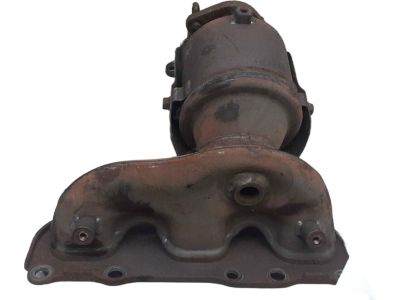
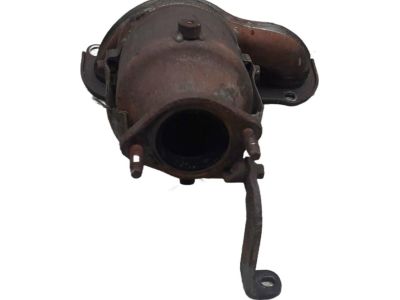
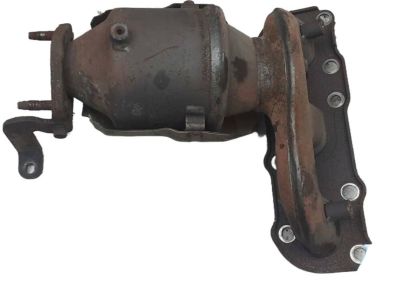
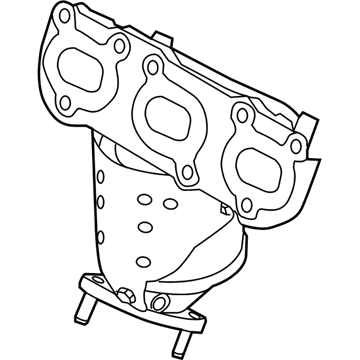

Kia Sedona Exhaust Manifold Catalytic Assembly, Right
Part Number: 285103CHX0$2182.71 MSRP: $3219.33You Save: $1036.62 (33%)Ships in 1-2 Business Days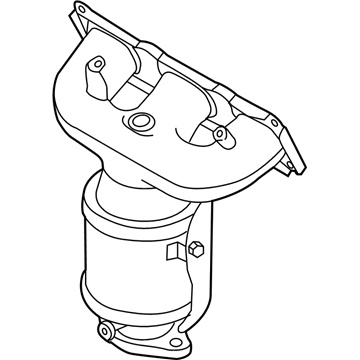
Kia Sedona Exhaust Manifold Catalytic Assembly, Left
Part Number: 285103CHW0$2182.71 MSRP: $3219.33You Save: $1036.62 (33%)Ships in 1-3 Business Days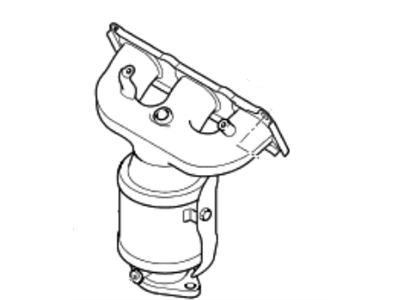

Kia Sedona Exhaust Manifold Catalytic Assembly, Left
Part Number: 285103CEW0$1502.97 MSRP: $2216.77You Save: $713.80 (33%)Ships in 1-3 Business DaysKia Sedona Exhaust Manifold Catalytic Assembly, Left
Part Number: 285103CZK0$1580.66 MSRP: $2261.32You Save: $680.66 (31%)Ships in 1-3 Business Days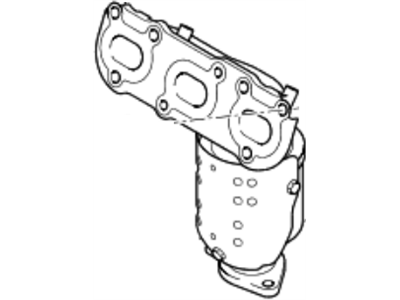
Kia Sedona Exhaust Manifold Catalytic Assembly, Right
Part Number: 285103C380$3303.30 MSRP: $4872.12You Save: $1568.82 (33%)Ships in 1-3 Business DaysKia Sedona Exhaust Manifold Catalytic Assembly, Right
Part Number: 285103CEX0$1444.43 MSRP: $2130.43You Save: $686.00 (33%)Ships in 1-3 Business DaysKia Sedona Exhaust Manifold Catalytic Assembly, Left
Part Number: 285103CJH0$1461.06 MSRP: $2154.95You Save: $693.89 (33%)Ships in 1-3 Business DaysKia Sedona Exhaust Manifold Catalytic Assembly, Right
Part Number: 285103CZL0$1510.50 MSRP: $2227.88You Save: $717.38 (33%)Ships in 1-3 Business DaysKia Sedona Exhaust Manifold Catalytic Assembly, Right
Part Number: 285103CJL0$1643.47 MSRP: $2424.00You Save: $780.53 (33%)Ships in 1-3 Business DaysKia Sedona Exhaust Manifold Catalytic Assembly, Left
Part Number: 285103CYE0$1533.73 MSRP: $2194.18You Save: $660.45 (31%)Ships in 1-3 Business Days
Kia Sedona Exhaust Manifold Catalytic Assembly
Part Number: 285103L310$1821.63 MSRP: $2686.77You Save: $865.14 (33%)Ships in 1-3 Business DaysKia Sedona Exhaust Manifold Catalytic Assembly
Part Number: 285103L320$2144.75 MSRP: $3163.35You Save: $1018.60 (33%)Ships in 1-3 Business DaysKia Sedona Exhaust Manifold Catalytic Assembly, Left
Part Number: 285103C370$2752.74 MSRP: $4060.08You Save: $1307.34 (33%)Ships in 1-3 Business Days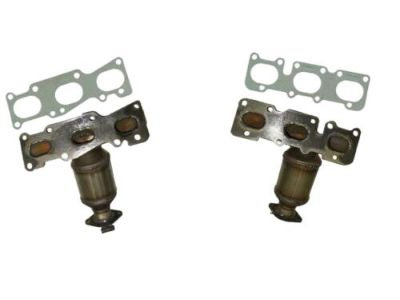
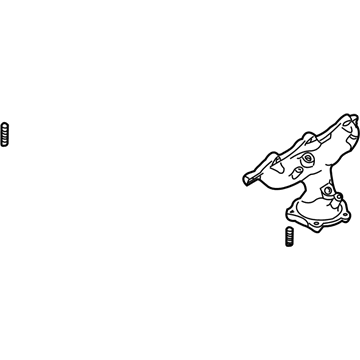

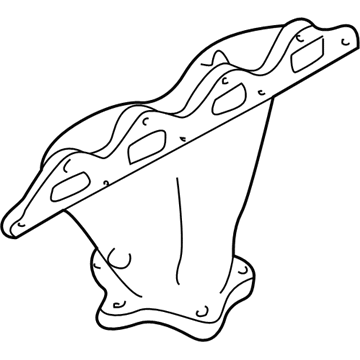
Kia Sedona Exhaust Manifold
The exhaust gases from every single cylinder of the Kia Sedona pack into a single stream within the Exhaust Manifold. This gives the minivan brisk throttle response and reliable emission control. Kia drivers can count on the strength of this Exhaust Manifold, made from tough heat resistant iron that won't crack after countless school runs and road trips. Every generation Kia Sedona benefits because the bosses, port matched runners and flange dimensions work with factory cylinder heads from common V6 and diesel powertrains, which means owners can fit the same factory grade Exhaust Manifold with no modifications. Internal runners, high-speed gas travel, chamber fume sweep, power boost, and faster light-off for catalytic converters are all taken care of by Exhaust Manifold gain in spacious Sedona for any journeys. As a result, many Kia owners appreciate that the design of the Exhaust Manifold does not interfere with sensor diagnostic functions. The thermal mass of the component protects adjacent parts from thermal spikes. This feature adds safety when climbing steep hills or carrying heavy loads. Moreover, a sealing gasket allows the cabin of every Sedona to remain quiet and free of harmful fumes. Drivers improve fuel efficiency because the Exhaust Manifold prevents back pressure surges that would otherwise force pistons to work harder. This prevents the popular Sedona from working harder. By securing the exhaust system so meticulously, this Exhaust Manifold helps keep Kia's long-lasting reputation intact. This makes it a smart upgrade for any Kia lover who wants their Sedona to be lively, clean and secure and not to mention, the component quietly goes about doing its job under the hood.
If you're in search of top-notch, reasonably priced OEM Kia Sedona Exhaust Manifold, then you've found the perfect spot. Our website boasts an extensive inventory of Kia Sedona Exhaust Manifold, all priced at the market's premier price. Rest assured, every genuine part we offer comes with a warranty straight from the manufacturer.
Kia Sedona Exhaust Manifold Parts Questions & Experts Answers
- Q:How to replace the exhaust manifold and catalytic converter assemblies on Kia Sedona?Posted by Art B.A:All engines are equipped with exhaust manifold/catalytic converter assemblies; on 2005 and earlier models, the catalytic converters can be unbolted from the exhaust manifolds. Begin by disconnecting the cable from the negative terminal of the battery. Spray penetrating oil on the exhaust manifold fasteners and allow it to soak in. Raise the front of the vehicle and support it securely on jackstands, then remove the engine's splash shield. Disconnect the oxygen sensor electrical connector on the top of the manifold(s); if replacing the manifold, remove the oxygen sensor. Remove the exhaust manifold heat shield and the exhaust manifold brace, if equipped. Remove the nuts retaining the exhaust pipe(s) to the exhaust manifold(s) or catalytic converter(s). Unbolt the exhaust manifold(s) from the Cylinder Head(s), working from the ends toward the middle, and slip the manifold(s) off the mounting studs. Carefully inspect the manifold(s) and fasteners for cracks and damage. Use a scraper to remove all traces of old gasket material and carbon deposits from the manifold and cylinder head mating surfaces. If the gasket was leaking, check the manifold for warpage on the cylinder head mounting surface by placing a straightedge over the surface and trying to insert a feeler gauge; if the clearance exceeds the limit, have the manifold resurfaced at an automotive machine shop. Position a new gasket over the cylinder head studs, install the manifold(s), and thread the mounting nuts into place. Working from the center out, tighten the nuts to the specified torque in three or four equal steps. The remainder of installation is the reverse of removal, using new gaskets when connecting the exhaust pipes. Finally, run the engine and check for exhaust leaks.Answered by Kia Parts Specialist Barry / Jul 16, 2023
Related Kia Sedona Parts
 Kia Sedona Emblem
 Kia Sedona Oxygen Sensor
 Kia Sedona Headlight
 Kia Sedona Seat Belt
 Kia Sedona Door Handle
 Kia Sedona Window Regulator
 Kia Sedona Door Lock Actuator
 Kia Sedona Catalytic Converter
 Kia Sedona Bumper
 Kia Sedona Lift Support
 Kia Sedona Spare Wheel
Browse by Year
2021 Exhaust Manifold 2020 Exhaust Manifold 2019 Exhaust Manifold 2018 Exhaust Manifold 2017 Exhaust Manifold 2016 Exhaust Manifold 2015 Exhaust Manifold 2014 Exhaust Manifold 2013 Exhaust Manifold 2012 Exhaust Manifold 2011 Exhaust Manifold 2010 Exhaust Manifold 2009 Exhaust Manifold 2008 Exhaust Manifold 2007 Exhaust Manifold 2006 Exhaust Manifold 2005 Exhaust Manifold 2004 Exhaust Manifold 2003 Exhaust Manifold 2002 Exhaust Manifold 2001 Exhaust Manifold